Platform Software Mechanics Influencing Poker Tournament Schedules and Rakeback Structures Across Payment Systems
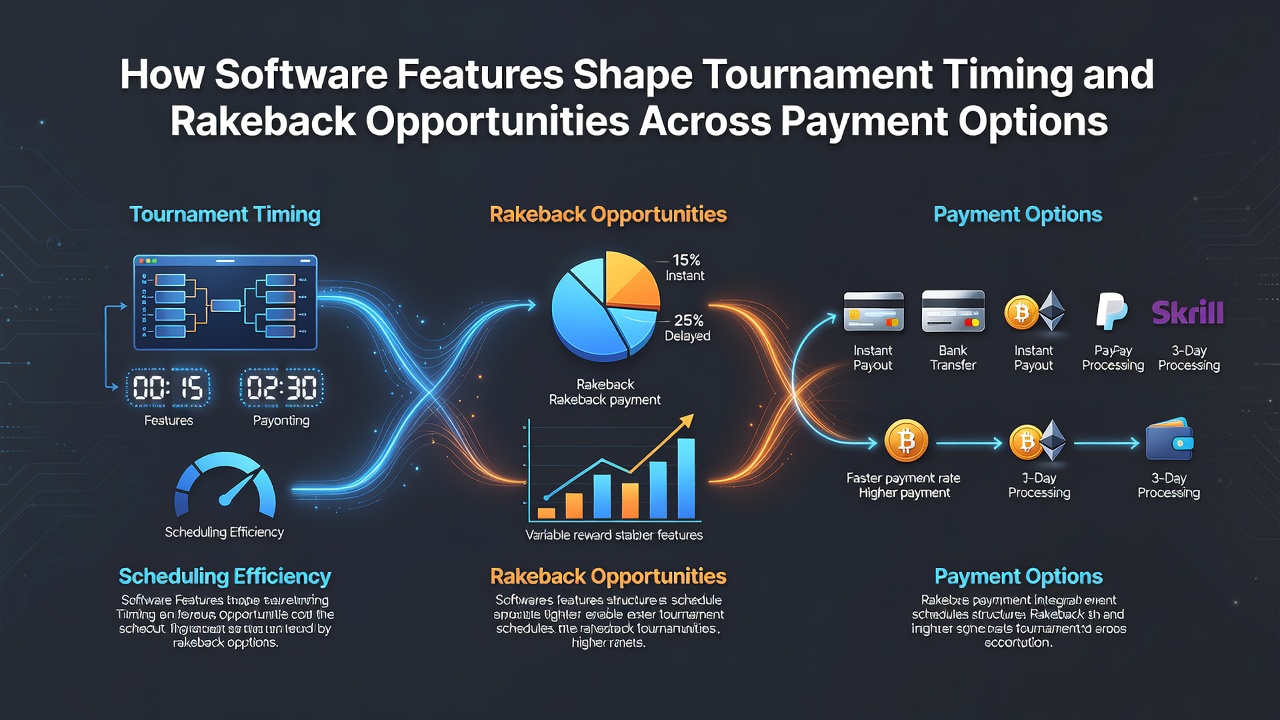
Platform software determines how online poker tournaments begin, progress through blind levels, and conclude while simultaneously calculating rakeback percentages that vary according to teh payment methods players select for deposits and withdrawals, and developers integrate algorithms that monitor registration volumes in real time to adjust start times automatically when participation thresholds shift.
Core Software Functions in Tournament Management
Registration modules track player entries continuously, and when numbers reach capacity thresholds the system locks tables or opens satellites without manual intervention, while timing engines calculate blind increase intervals based on average stack sizes and remaining players so that events finish within predictable windows even as fields expand or contract during late registration periods. Data from industry reports shows these automated adjustments reduce average event duration by up to 18 percent compared with fixed schedules used on older platforms, and observers note that software also factors in time zones across global player bases to optimize start times for peak participation hours in different regions.
Payment gateways connect directly to these timing systems because deposit confirmation speeds influence whether a player can register before registration closes, and platforms using instant crypto verification often allow entry right up to the final minute whereas bank transfer methods require longer processing windows that can push participants into later starting events or satellites instead.
Rakeback Calculation Tied to Transaction Types
Rakeback engines record every hand's contribution to the house fee then apply percentage returns that differ by payment channel, so credit card deposits might generate standard rakeback rates while cryptocurrency transfers receive bonus multipliers due to lower processing costs passed back to users, and researchers at the University of Nevada Gaming Research Center found in 2025 studies that players using digital wallets averaged 2.3 percent higher effective rakeback than those relying on traditional cards because fee structures embedded in the software favored faster-settling methods.
According to figures from the Canadian Gaming Association, platforms processed over 47 million transactions in the first half of 2026 with crypto options accounting for 31 percent of volume and delivering proportionally higher rakeback distributions as a result of reduced intermediary charges built into the payout algorithms.
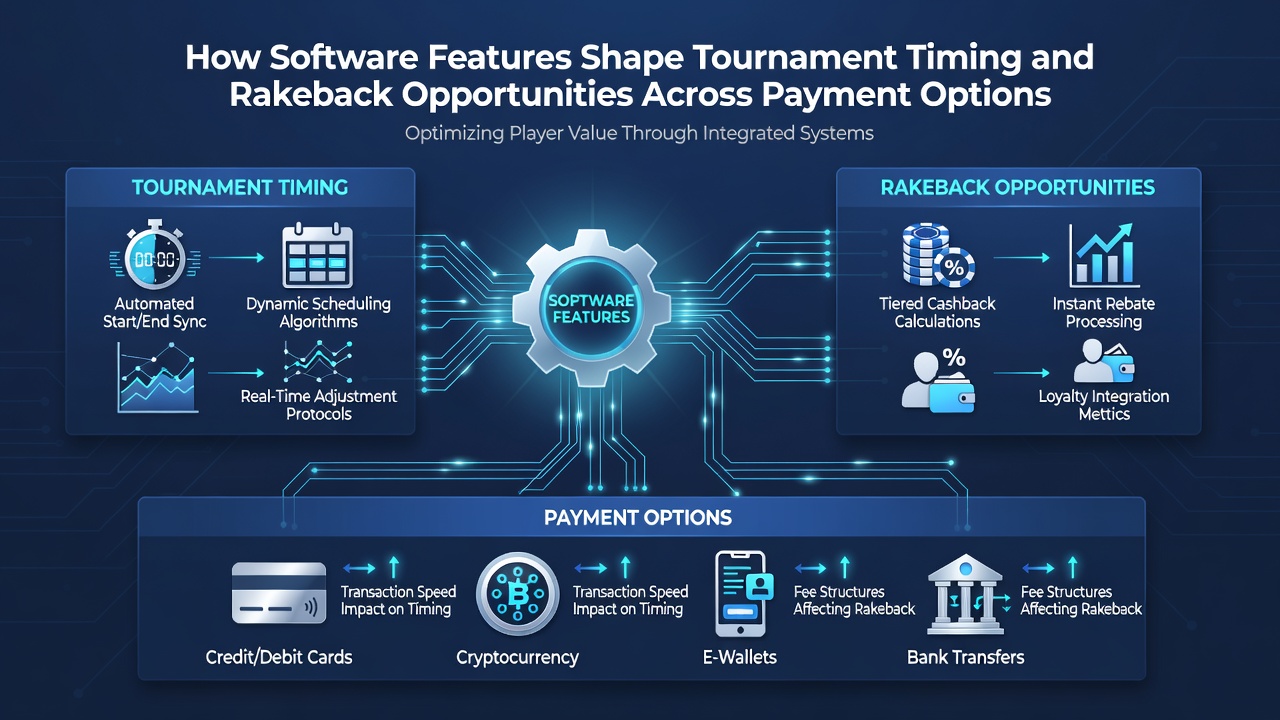
Integration of Payment Options With Scheduling Algorithms
Software layers link payment confirmation APIs to tournament clocks so that delayed deposits automatically reroute players to alternative events with later start times, preventing missed registrations, and this interconnection proves especially relevant for high-stakes MTTs where late entries carry significant prize pool impact, while analysts tracking July 2026 platform updates observed that several major sites introduced dynamic scheduling features that shifted start times by fifteen to forty-five minutes when payment queues exceeded normal thresholds.
Those who study transaction data across regions report that e-wallet users experience the fewest disruptions because their processing times align most closely with software registration cutoffs, whereas wire transfer participants encounter more frequent timing conflicts that force reliance on satellite qualifiers instead of direct entry into primary tournaments.
Regional Variations in Software Implementation
European operators following Malta Gaming Authority guidelines implement stricter audit trails within their rakeback modules that log every payment type separately, which allows precise tracking of reward eligibility without affecting tournament pacing, and similar frameworks in Australian jurisdictions require software to display real-time rakeback estimates differentiated by deposit method so players can compare options before committing funds.
These regional differences create varied opportunities because platforms serving multiple markets must maintain compatible codebases that adjust both timing parameters and rakeback formulas simultaneously when players switch between currencies or payment providers.
Future Developments in Platform Capabilities
Upcoming releases scheduled for late 2026 plan to incorporate machine learning models that predict optimal tournament start windows based on historical payment patterns and player behavior data, potentially increasing rakeback uptake by aligning events more closely with deposit spikes, and early testing indicates these predictive tools could further reduce average wait times between deposit and registration confirmation by another 12 percent across tested networks.
Conclusion
Software architecture therefore serves as the central mechanism connecting tournament timing precision with differentiated rakeback outcomes that depend on chosen payment systems, and continued refinements in algorithmic integration across global platforms will shape how players access events and recover portions of house fees in coming years.