Mapping Digital Player Pathways: Deposit Options, App Efficiency, and Event Participation Trends
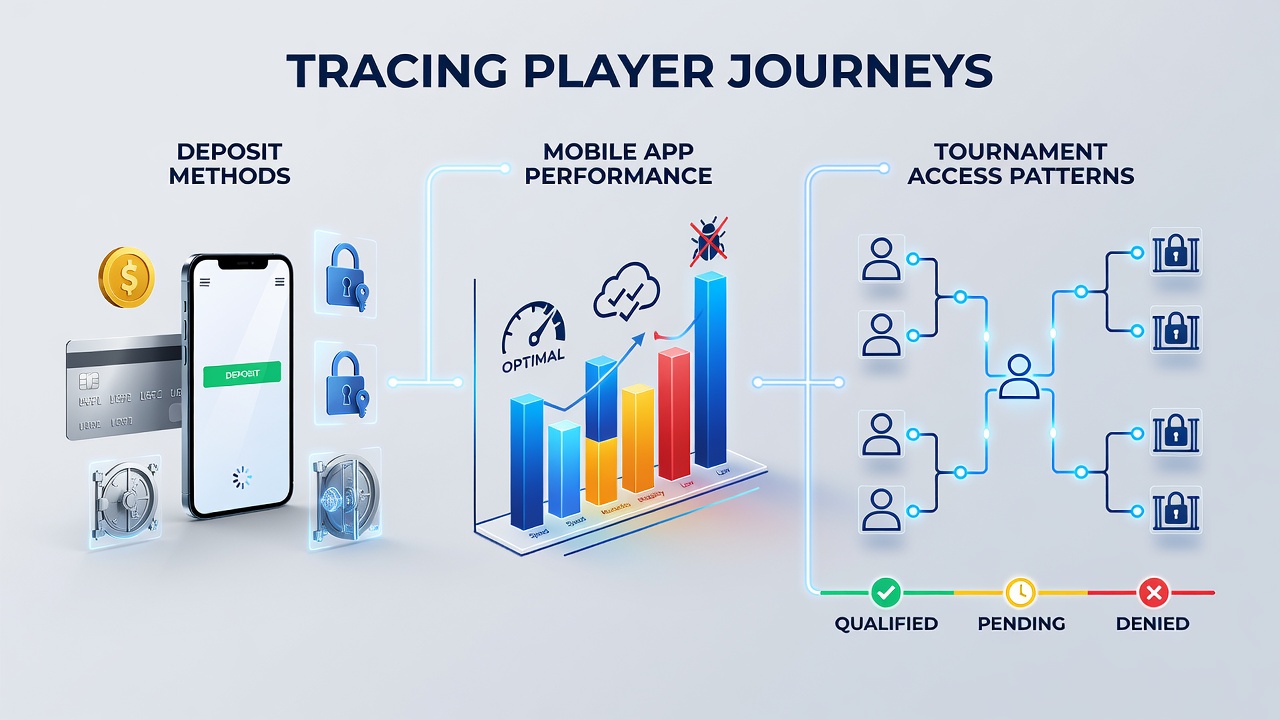
Digital gaming platforms track how users move from initial sign-up through financial transactions, device interactions, and competitive events, and data from July 2026 shows clear patterns in these pathways. Analysts examine deposit methods because they serve as the first major gateway, with credit cards, e-wallets, and bank transfers each generating distinct user behaviors that influence later engagement levels. Studies indicate that platforms processing deposits in under thirty seconds retain higher session volumes than those requiring additional verification steps, and this timing difference appears consistently across multiple operator reports.
Deposit Methods and Initial User Flow
Payment options shape how quickly players reach active play, since credit card transactions often complete instantly while bank transfers introduce delays of one to three business days. Research from the Australian Institute of Criminology highlights that e-wallet users complete an average of 2.4 more deposits per month than those relying on traditional cards, largely because stored credentials reduce friction during repeat transactions. Platforms that integrate multiple regional options, such as Interac in Canada or POLi in Australia, see broader geographic participation because local preferences reduce declined transaction rates. Observers note that July 2026 figures reveal a 14 percent rise in cryptocurrency deposits compared with the prior year, driven by faster settlement times and lower fees on certain networks.
Mobile App Performance and Session Continuity
Once deposits succeed, mobile applications determine whether users maintain momentum or drop off during navigation. Performance metrics such as load times under two seconds and crash rates below 0.5 percent correlate with extended play sessions according to aggregated telemetry from major app stores. Developers optimize for both iOS and Android ecosystems because users frequently switch devices mid-session, and seamless handoff between platforms preserves deposit history and tournament eligibility. Data indicates that push notification response rates improve when apps deliver real-time balance updates and event reminders, yet excessive alerts lead to higher uninstall rates within the first week. Those who study retention patterns find that battery-efficient coding and offline caching reduce abandonment during travel or low-connectivity periods.
Tournament Access Patterns and Progression Routes
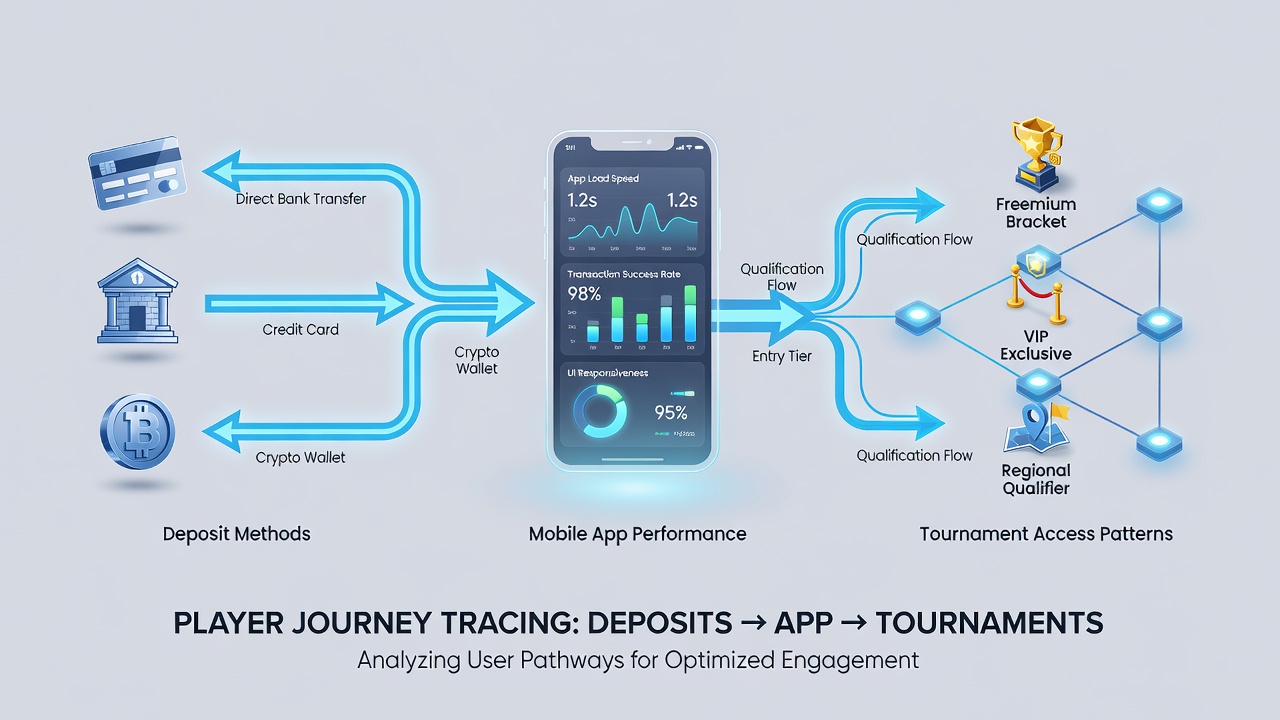
Entry into scheduled events often follows successful deposits and stable app sessions, creating a measurable sequence that operators monitor for optimization. Satellite qualifiers and direct buy-ins each attract different user segments, with satellite routes showing higher first-time participation rates because they lower the initial financial threshold. Reports compiled by the European Gaming and Betting Association document that mobile users register for 38 percent more tournaments per active week than desktop users, attributed to on-the-go registration features and calendar integration. July 2026 analytics further reveal that players who access events through in-app search filters rather than external emails demonstrate stronger long-term retention, suggesting that native discovery tools reinforce platform loyalty.
Interconnections Across the Journey
Deposit speed, app stability, and tournament visibility interact rather than operate in isolation, and platforms that align these elements report higher completion rates through the full funnel. When deposit confirmation triggers immediate app notifications about upcoming events, conversion from funded account to registered participant increases measurably. Geographic variations matter as well, because regulatory requirements in different jurisdictions affect available payment rails and therefore influence which users can even reach the tournament stage. Researchers tracking multi-platform behavior observe that users who encounter friction at any single point, whether slow deposits or lagging app interfaces, show reduced likelihood of returning within thirty days. Cross-referencing these touchpoints allows operators to identify bottlenecks and test targeted improvements without disrupting unrelated segments of the player base.
Conclusion
Tracing these journeys supplies operators with actionable sequences rather than isolated statistics, and continued monitoring through 2026 and beyond will likely refine how deposit methods, mobile performance, and tournament access integrate into cohesive user pathways. The patterns that emerge from combined data sets highlight opportunities for smoother transitions at each stage while respecting regional differences in payment infrastructure and device usage.